Facebook carries the deepest targeting infrastructure of any paid social platform and the most mature retargeting tools available. MPP runs it as the anchor of most paid social programs we manage, not by default, but because the audience depth and conversion data usually justify it.
Facebook advertising is paid media placed across Facebook's News Feed, Stories, Reels, and Marketplace surfaces, targeted using a combination of declared interests, behavioral data, and audience matching through Meta's ad platform. It remains the largest paid social platform by active user base and the most established by targeting depth and measurement tooling.
Facebook rarely runs as an isolated line item inside an MPP program. It's typically the platform doing the heaviest lifting on retargeting and mid-funnel conversion, working alongside paid search capturing intent and programmatic extending reach. Orbit is what keeps those three channels from working against each other, budget, audience, and message stay coordinated instead of getting optimized in three separate silos.
At the core of Orbit sits the Hi-5, five questions asked at the start of a program and throughout it.






Core is the audiences, creative formats, and placements already proven to convert. This is where the majority of Facebook budget lives, funded to keep performing.
Explore runs a defined, smaller slice of budget testing what hasn't been proven yet, a new audience segment, a creative angle the account hasn't run, a placement getting tested for the first time.
Core and Explore aren't competing for the same dollars. When something in Explore performs, what happens next depends on the result, sometimes it earns a permanent place inside Core, sometimes it keeps running alongside Core on incremental budget MPP requests to support it. Either way, the program gets stronger.
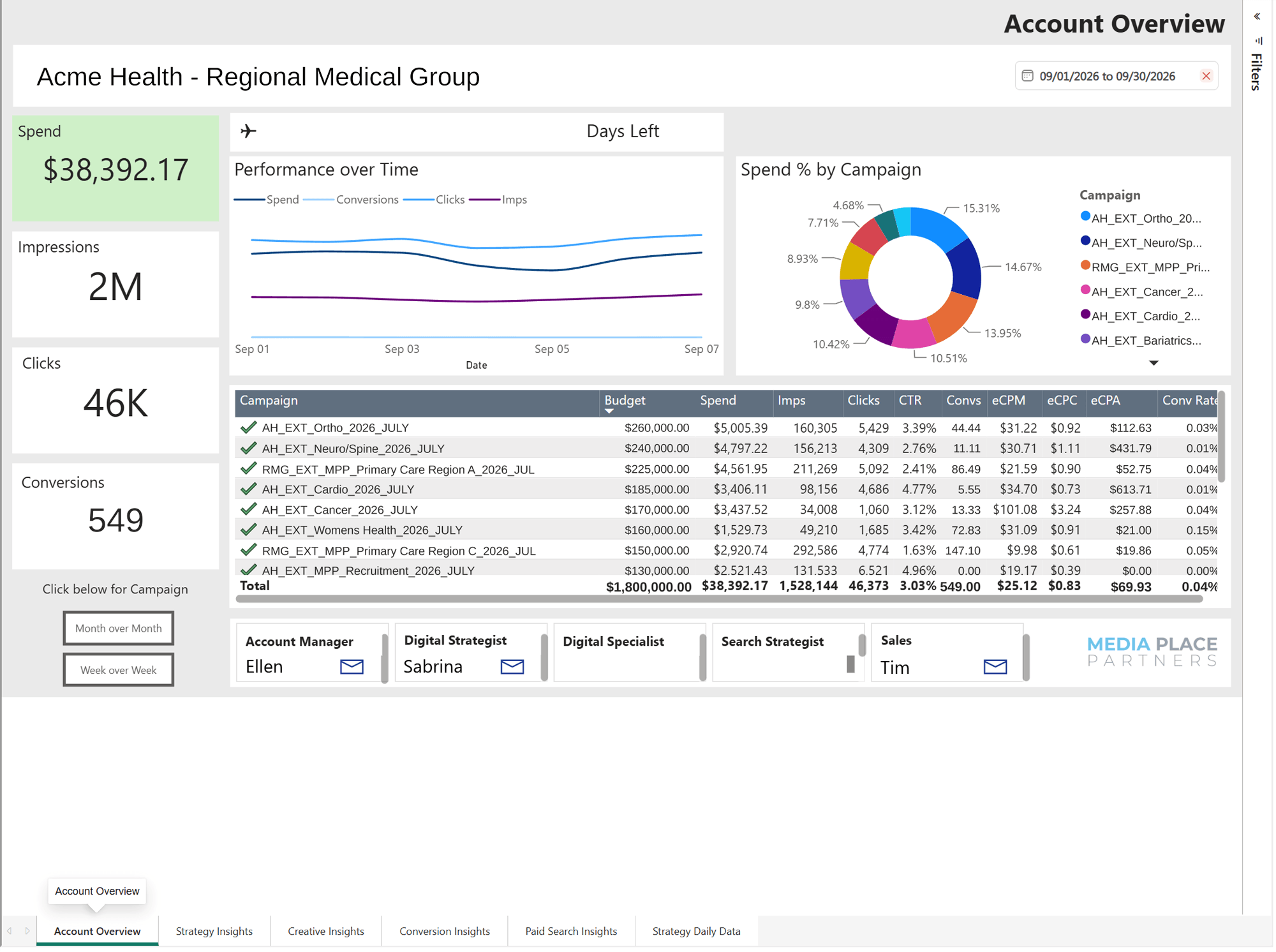
Facebook performance feeds into HelloMPP, MPP's proprietary client analytics portal, updated twice daily. Spend pacing, audience performance, and conversion data shows up in HelloMPP so fully informed decisions can be made about optimization and budget allocation.