MPP plans and buys programmatic display across the open web, mobile web, and in-app environments. Audience strategy, inventory governance, and verification are scaled to what each program supports and built into the buy from the start.
Reach the right audience in the right place.
Programmatic display advertising is the automated buying of display ad inventory through real-time bidding and direct programmatic deals. Buyers use audience data, contextual signals, and inventory controls to reach defined segments across the open web, mobile web, and in-app environments. Display formats include standard banner sizes, rich media, and native units served programmatically across publishers.
A managed programmatic display program controls who sees the ad, where it appears, and how often, with brand safety and verification filters applied before the bid is made and confirmed after the impression is served.
At MPP, programmatic display runs inside Orbit, MPP's marketing operating system, with audience strategy, inventory governance, and continuous optimization tied back to the program's overall objectives. Performance feeds into HelloMPP, MPP's client analytics portal, updated twice daily.
Programmatic display has a defined job inside the program. MPP runs it with the same operating approach applied to every channel, scaled to what the program supports.
MPP plans inventory access based on the audience, the message, and the controls the program requires.
The open web is where the broadest reach is available, across publisher sites covering news, sports, entertainment, lifestyle, and category-specific content. Open web inventory is bought through DSPs and exchanges with audience targeting, contextual filters, and verification applied at the bid layer.
Mobile and in-app placements reach audiences during the time they spend outside the desktop environment. In-app inventory operates inside a different signal environment than mobile web, with its own brand safety and viewability considerations. MPP plans both based on where the audience actually is and where the inventory supports the program.
Private marketplaces give buyers access to curated, vetted inventory through invitation-only deals with specific publishers. PMPs are used when a program requires higher-quality environments, premium placements, or controlled supply paths. MPP evaluates PMP access during planning and uses it where it produces meaningfully better outcomes than open exchange buys.
Programmatic guaranteed deals are direct buys with specific publishers at fixed prices, executed through programmatic pipes. They are used when reach in a specific environment is required and a controlled price and inventory commitment makes sense for the program.
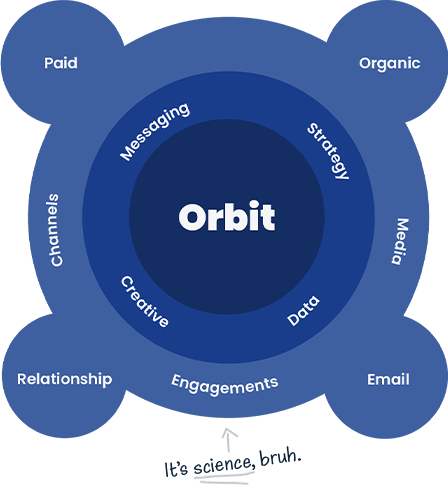
Inside Orbit, the Hi-5 framework applies across every channel at once. For programmatic display, that means asking continuously whether the audience is actually being reached, whether the message lands in the placement context, whether the inventory environments are worth being in, whether budget is moving toward what is producing outcomes, and whether reporting reflects what actually happened.
Programmatic display rarely runs alone. It works alongside paid search to capture demand the display program builds, paid social to reinforce messages in different placement contexts, and streaming TV + video to extend reach into environments where attention is higher.
Core vs. Explore governs how budget moves between the proven program and controlled testing across every channel, programmatic included.
Programmatic display performance feeds into HelloMPP, MPP's proprietary client analytics portal, updated twice daily. Spend, delivery, viewability, conversions, and week-over-week changes are consolidated in one place without waiting on a scheduled report.
Explore HelloMPP →

The Interactive Advertising Bureau publishes the standards that govern clean programmatic supply, including ads.txt, sellers.json, OpenRTB, and the verification frameworks buyers rely on. IAB membership means MPP buys inside those standards rather than working around them.