AM/FM radio reaches 87% of U.S. adults weekly, more than any other media platform, including smartphones and connected TV. MPP buys AM/FM and satellite radio, evaluating stations, dayparts, and on-air talent against the audience a plan calls for. Streaming audio is planned separately, since the two reach different listening habits and, often, different people.

How MPP runs radio

Every channel MPP manages runs inside Orbit, specifically on the Hi-5, five questions asked at the start of a program and throughout it. Here's how the Hi-5 looks in radio.

Explore Orbit →


Campaign resonance icon
Resonance
Are the stations and formats reaching listeners who actually match who this business needs to talk to? A station with a huge audience can still be the wrong audience for a given plan.
media cohesion icon
Cohesion
Does the read fit the personality of the station it's running on? A live read voiced by a trusted local host works differently than a produced spot, and the two aren't interchangeable.
Media reach icon
Reach
Are we buying the right combination of dayparts, stations, and satellite inventory to reach listeners when they're actually tuned in, not just when airtime is cheapest?
media allocation icon
Allocation
Is radio earning its share of the budget based on what it's delivering for the program, not because a rep relationship made it the easy default?
Reporting icon
Reporting
Are we tracking what radio is actually built to do, reach and frequency with a trusted local voice, rather than holding it to metrics it cannot produce?
Explore Hi-5 →

How Core vs. Explore works in radio

Core vs. Explore is how MPP balances stability with improvement.

Core

Core is the stations, dayparts, and formats that have proven they reach the right audience at the right frequency. Core stays funded because it's already earning its place.

Explore

Explore carries its own budget for what hasn't been tried yet: a new station, an untested daypart, a host read instead of a produced spot. When something in Explore performs, it earns a spot in Core. When it doesn't, it stops, and the budget moves to what already works.

Explore Core vs. Explore →

What MPP builds and manages

Station Selection and Negotiation
Stations chosen and negotiated against audience fit and rate, across AM/FM and satellite, not accepted at whatever a rep quotes first.
Daypart and Format Strategy
Placements built around when a target audience is actually listening, whether that's morning drive, a specific format, or a satellite channel with a dedicated following.
HOst Reads and Produced Spots
Both formats planned and produced as the program calls for, a live read voiced by a trusted on-air personality or a fully produced spot, depending on what fits the message and the station.
Satellite Buying
Satellite inventory bought on its own terms, since national satellite platforms like SiriusXM are negotiated and structured differently than local terrestrial spot buys.
Ongoing OPtimization
Schedules adjusted as ratings and performance data come in, with underperforming stations or dayparts reworked rather than left to run out the buy.

What shows up in HelloMPP

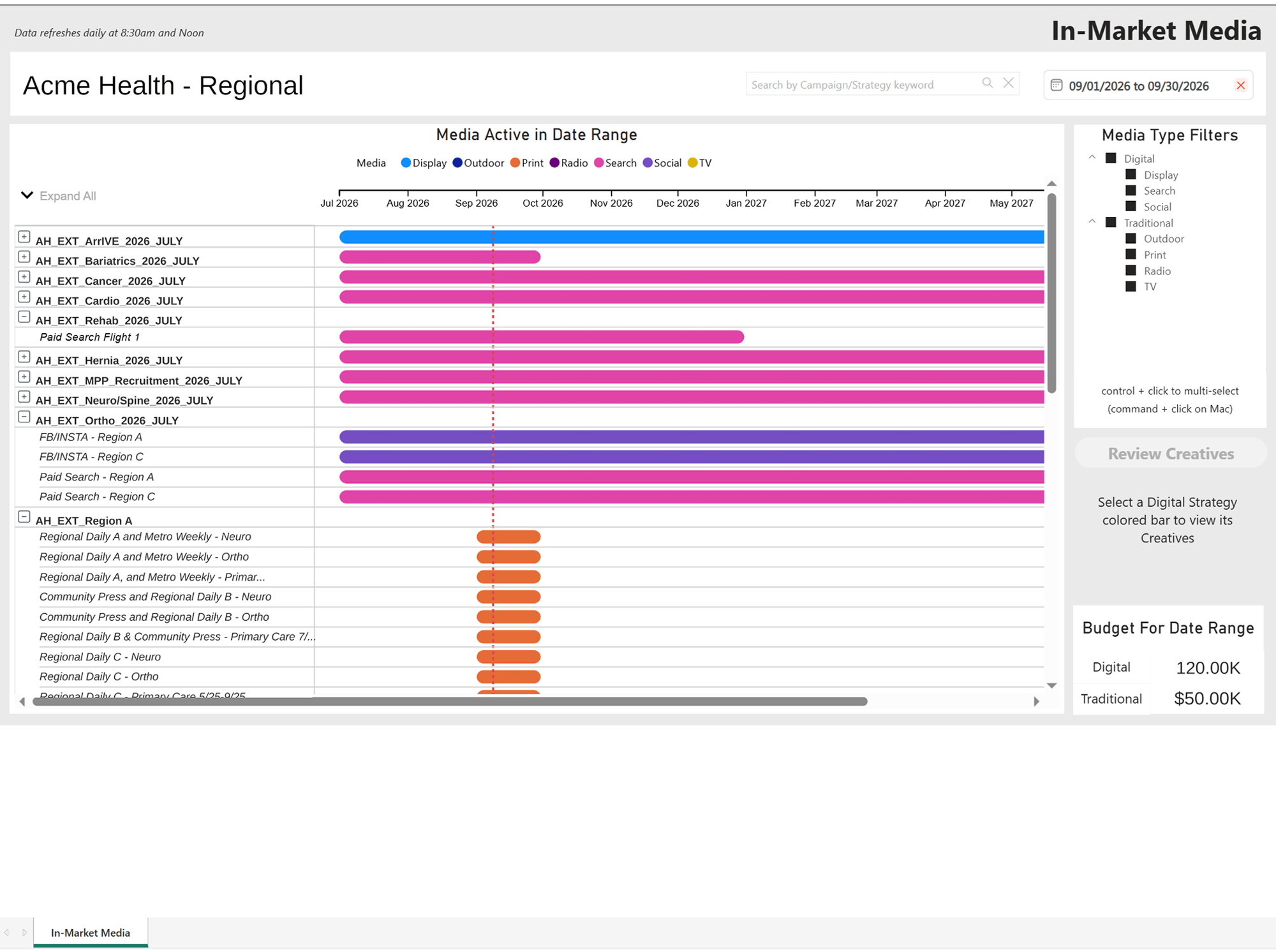
Radio doesn't leave a digital trail behind it. No click, no impression, nothing to mark the moment someone actually hears a spot. What HelloMPP shows for radio is the in-market report, confirmation of what's airing, on which stations, and when, sitting next to every other channel in the plan.

Explore HelloMPP →

The personality behind the placement

Radio's value often comes from the people, not just the schedule. MPP's local relationships extend to the on-air personalities themselves, not just a station's sales team, opening up host reads and community tie-ins that a plan built off a rate card alone would never surface. Because MPP is media-neutral, those relationships are about audience fit, not which station offers the agency the best incentive to run their inventory.


889398103108

Is radio right for your program?

Radio is a strong fit when:

  • A trusted local voice or personality can lend credibility a written ad can't
  • The audience needs to be reached during commuting, work, or other moments without a screen in front of them
  • Budget favors frequency over a single high-production placement
  • The category benefits from community presence, not just a media buy

Radio is a weaker fit when:

  • The message depends on visuals to make its case
  • The target audience skews narrow enough that no station format lines up with it
  • There's no budget to sustain the frequency radio needs to register
  • The goal is an immediate, trackable conversion with no room for a brand-building channel

Frequently asked questions about radio advertising

How much does radio advertising cost?
Radio spot costs vary by market size, station format, and daypart, with morning and evening drive time commanding higher rates than overnight or midday slots. Spots typically sell in :15, :30, and :60 second increments, and rates are usually quoted as a cost per point or a flat rate depending on the station. MPP negotiates rates directly with stations based on audience fit rather than accepting a rate card at face value.
What's the difference between a host read and a produced radio spot?
A host read is voiced live or recorded by the station's own on-air personality, delivered in a conversational tone that carries the trust listeners already have with that host. A produced spot is fully scripted and mixed ahead of time, closer to a traditional commercial. MPP plans both formats depending on what fits the message, the station, and the audience.
Is radio advertising still effective with so many streaming options available?
Yes. AM/FM radio reaches 87% of U.S. adults weekly, more than any other media platform Nielsen measures, including smartphones and connected TV. Streaming audio has grown alongside radio rather than replacing it, and the two reach audiences with different listening habits.
What's the difference between buying terrestrial and satellite radio advertising?
Terrestrial radio (AM/FM) is bought station by station and market by market, with rates and availability negotiated directly with each station. Satellite radio, primarily SiriusXM, is a national subscription platform with its own ad sales structure and inventory, bought differently than a local spot buy. MPP evaluates both against where a program's audience actually listens, rather than treating them as interchangeable.
How far in advance do radio ads need to be booked?
Lead time depends on the station and format. High-demand dayparts like morning drive on popular stations can book out weeks in advance, especially around seasonal periods, while less competitive slots can sometimes be secured on shorter notice. MPP builds a booking timeline into planning based on the specific stations and dayparts a program calls for, rather than assuming a universal lead time.

Is your radio buy working as hard as the host?

A great personality and a strong station don't mean much if the buy isn't connected to what's happening everywhere else. That's worth a conversation with MPP.

Handwritten text that says we're easy to talk to, pinky swear.
Radio advertising icon

Say hello to MPP.

MPP delivers transparent media planning and buying with a system you can understand and results you can measure. Orbit, the Hi-5, and Core vs. Explore keep decisions accountable. HelloMPP dashboards keep performance visible. If you're ready for a partner that makes every dollar defendable, that's exactly what we do.

Let's get to work.
Media Place Partners the Midwest Marketing Agency Logo
3351 Claystone Street, SE
Suite 102
Grand Rapids, MI 49546
616-285-5429