5 things your ad needs to win business

When it comes to advertising, creating ads that work is more than just putting a pretty picture and BUY NOW together. Several key elements must be in place for an ad to be truly effective. No matter if you’re advertising a new product or a service, there are five elements that your ad must have to win business and for the best chance of success.

#1 An attention grabbing headline
As the big words that draw the eye, the headline is the very first thing that potential customers see when your ad appears. If you don’t catch their attention or pique their interest, they’re not going to read the rest of your ad, let alone click if your ad is digital.

For anyone who’s tried their hand at crafting ads, the headline is almost always the most challenging aspect. Get this wrong and your ad performance pays the price. With that in mind, here are a few tips to help you write effective headlines for your ads.
Know your audience
To write a great headline you must know your audience. What do they want? What problems do they have? How does your product or service solve these problems?
Focus on benefits
People buy benefits, not features. Here are a few examples:
What’s key here is that you take a benefit and craft a story around it. Sure, you can just use a headline of “Lower your energy bills,” but a more effective take is how Ecobee and Nest took that idea and created these ads:
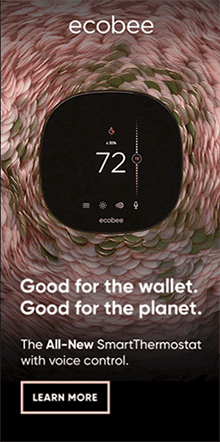
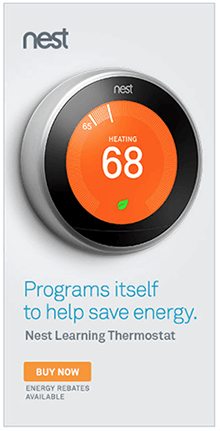
Two different takes on the same idea – saving energy, lower bills, good for the climate. Of course, these brands employ professionals to craft this sort of copy and theme. Hours and hours of thought and process go into coming up with ideas like this and the right words. Not everyone is Don Draper, and that’s ok. A good agency will have a process to work with you to develop headlines and messaging that leverages your business knowledge and their creativity.
Use words that grab attention (and back them up)
The old "power word" lists were built for print ads that competed with other print ads. Today your headline competes with a skeptical scroller and a feed full of clickbait. The words that still work tap real human motivation, and they work best when something concrete stands behind them.
- Relevance: You, Your, Finally. People notice what's about them. "Finally, a media plan your CFO will actually read."
- Novelty: New, Now, Introducing, First. Newness is still one of the strongest pulls in advertising, as long as it's actually new. "New: same-day proofs on every print order."
- Value: Free, Save, Included, Bonus. Say exactly what they get. "Free creative audit with any Q4 campaign."
- Ease: Simple, Easy, Fast, Without. Remove the friction they're dreading. "Launch a CTV campaign without a six-figure budget."
- Proof: Proven, Tested, Trusted by, Rated. Always attach the evidence. "Trusted by 120 Michigan brands."
- Urgency: Limited, Ends, Last chance, Only. Only when the deadline is real. "Rates lock Friday."
- Curiosity: How, Why, What, Mistake. Open a loop the ad or article closes. "The mistake that's wasting 30% of your ad spend."
- Specificity: numbers, timeframes, named results. This is the most powerful "word" of all. "Cut cost per lead 32% in 60 days" beats "Powerful, proven results" every time.
Be clear and concise
You’re going to hear this repeatedly in this article. Headlines must be clear and easy to understand. It can’t be overstated. Avoid jargon, buzzwords, or technical terms. Your audience may not understand them, and if they don’t, you lose them. Also, keep it short. Headlines under 10 words work best.
Create urgency
When applicable, use words like “limited time”, “act now”, or “supplies are limited”. These sorts of phrases create a bit of FOMO and encourage people to take some action.
Have a bit of fun with it
If appropriate for your brand and product/service, using humor and wit can make your headline stand out. Just be sure it’s tasteful and relevant.
#2 Messaging that cleanly supports your headline
You’ve written the perfect headline, now what? Sometimes you need to support your headline with additional messaging. Other times, the headline does all the heavy lifting. If you add more messaging, be sure it gives a user a reason to believe the benefit in the headline.
.png)
It should be short (this is an ad after all) and very clear. If the headline is for shouting out the benefits, the messaging is for dropping in features. Using our examples from above, here are some potential messaging options.
Ecobee could add messaging to support their claims
- Automatically heat and cool when electricity is cheaper and cleaner.
- Learns your routine and recommends changes to save you more.
- Runs the fan to maximize climate control after your system cycles.
#3 A visually appealing design
The design of your ad is just as important as the messaging. Your ad must be visually appealing and eye-catching. Use colors, images, and typography that will grab people’s attention but also make sure that the choices you make are in line with your brand. Here are a few tips for visuals.

Stay focused. For most ads, the goal is to drive traffic to a landing page. Read this article for a quick overview of why landing pages are important to marketing. Let the landing page do the persuasion. Remember that an ad’s main job is to drive action, not complete the sale or generate the lead. That work happens elsewhere. Focus on crafting a compelling headline, branding, and any necessary additional support message. A surefire way to lower performance is to expect your ad to do too much, then load it up with a short novel’s worth of text.
Use stock photos carefully. It’s easy to run straight to free stock photo archives and start loading up your ads with smiling people. Be selective and choose images that resonate with your audience. Yes, people like looking at other people. They like looking at people who look like them even more. Think about your audience, who they are, and how your product makes them feel. That’s a good start.
Take a big swing. Cliches repel attention, uniqueness attracts attention. Everyone in your space doing things a certain way is probably a good reason not to. You’ll only be adding to the sea of sameness and you’ll blend right in and be overlooked. The best ads stand out. To stand out, you must take chances.
Whatever your design choice, make sure that your landing page follows the cues set by your ad. If you use red and promise a download on the landing page, use red on the landing page and deliver on that download immediately. If your ad says visit our store now, and the resulting page is your home page, that’s a disconnect and does not build confidence.
#4 A crystal clear call to action
Your ad needs a clear call to action. What do you want people to do after they see your ad? Visit your website? Call your store? Make a purchase? Whatever it is, make sure it’s clear and easy to follow. Don’t leave people wondering what they’re supposed to do next.

Be specific with your CTA. Instead of just saying “Learn More” or “Download,” say “Explore your options” or “Get your copy now.” Don’t overthink it – just make it clear and expressive.
#5 Branding
Don’t forget your brand. Most companies can benefit from additional branding. Even giants like Nike and Amazon have very bold branding on everything they do. Every ad you do must include branding. You may have the best pitch in the world, but if they don’t know who you are, it will affect performance. That’s why branding and awareness campaigns are crucial.

Very few people are going to see your ad (no matter how good it is) and immediately buy from you. What your ad does is give you the opportunity to make a pitch, to draw the customer into your experience, to begin to tell your story, so that when the customer has a need in your vertical, they remember you.
How you implement branding depends on the channel you’re advertising in. A billboard requires your logo to be very large and visible at speed when cars go by quickly. Conversely, a display ad or pre-roll video might have a less prominent brand footprint because the visitor may spend more time with it. A good agency can guide you with these considerations in mind.
Other factors like how well-known your brand is, what the data says about how people interact in your space, and your audience behavior all play a role in how prominent your brand should be.
Just be sure every ad you run has branding included.