

Paid search is one of the most efficient tools in marketing. It reaches people at the exact moment they're looking for what you sell. That's also the limit of what it can do. Search can only catch demand that already exists, it can't create it.
I'm seeing more businesses cutting everything except paid search, because search is easy to measure, budgets are tight, and leadership demands results. Results that show up in a dashboard the next morning. Awareness work like OOH, radio, or social video takes longer to pay off and is harder to tie to a single lead, so it's the first thing to go when budgets get tight.
Then leads slow down, and the usual fix is to pour more money into search. If you get lucky and that works, it doesn't work for long.
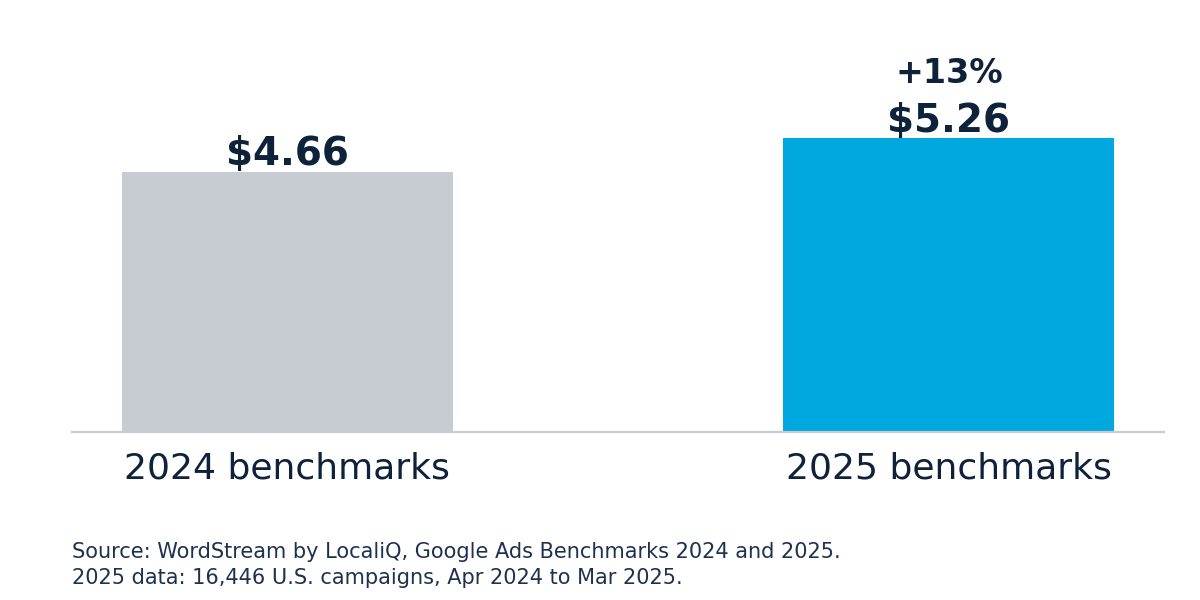
WordStream's 2025 benchmarks, covering more than 16,000 U.S. campaigns, found the average cost per click rose almost 13% in one year, to $5.26, with increases in 87% of industries. More search spend means paying more to reach the same pool of people who already know what they want.
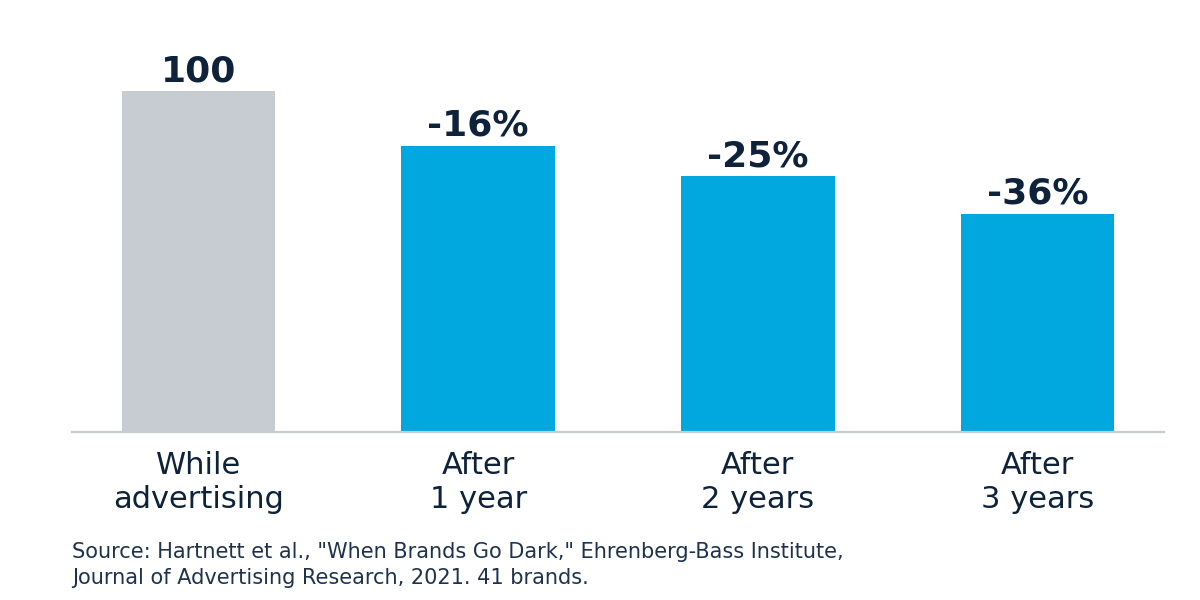
When brands stop broad-reach advertising, sales slide year after year. The Ehrenberg-Bass Institute found sales fell an average of 16% after one year, 25% after two, and 36% after three. Nielsen's models estimate brands lose about 2% of long-term revenue for every quarter they're off air, and it takes three to five years to rebuild.
The reason is simple: people choose what they recognize. In a classic taste test, 73% of shoppers who recognized a brand picked it over the ones they didn't know, even when the better tasting peanut butter was in a jar they'd never heard of. If nobody has heard of you, your search ad is up against names people already trust.
You don’t need an analytics department for this. You can do three simple things
that will tell you a lot.
Every budget is different, but here's where we'd start. Keep at least 10% of your search budget on your own business name, so competitors can't buy their way in front of people already looking for you. Research on Bing found competitors can take 18% to 42% of those clicks when a brand stops defending its name.
Then put 10% to 20% of your total media budget toward people who don't know you yet, or who know you but haven't bought. On a small budget, that might be Meta. On a larger one, OOH, streaming audio, or CTV come into play. The big studies suggest brands do best spending much more than that on awareness, so treat 10% to 20% as a floor to build from.
At minimum go pull that branded search trend and send it to me. I'll have a look and the team here at MPP will let you know what we see.