Out-of-home advertising revenue hit a record $9.46 billion in 2025, its 19th consecutive quarter of growth, with digital formats driving much of that increase. MPP plans and buys static and digital out-of-home across billboards, transit, and other formats, negotiated directly with vendor networks and chosen against real board-level data rather than availability alone.
Out-of-home advertising is paid media displayed in public spaces rather than on a screen someone can open and close, including billboards, transit displays, street furniture, and place-based formats. Placements are sold through vendors who own or manage each piece of inventory, and pricing is tied to a board's traffic volume, visibility, and location rather than a bid or auction. Digital out-of-home (DOOH) formats can change creative dynamically, based on triggers like time of day or weather, where static formats run a single design for the length of the buy.
MPP builds out-of-home into a plan through vendor relationships and board-level data, not a generic map of available inventory.
Out-of-home gets the same five-question check every channel in the program runs on. That's the core of our Orbit system. Here's what Hi-5 looks like applied to it.
Explore Orbit →




Core vs. Explore is how MPP balances stability with improvement.
Core is the boards, formats, and locations already proven to deliver traffic and audience fit for the program. These stay in the plan because the data backs them, not because they've always been there.
Explore tests what hasn't been proven yet: a new market, a format the program hasn't used before, a digital board instead of a static one. What earns its place moves into Core. What doesn't gets replaced before the next buy.

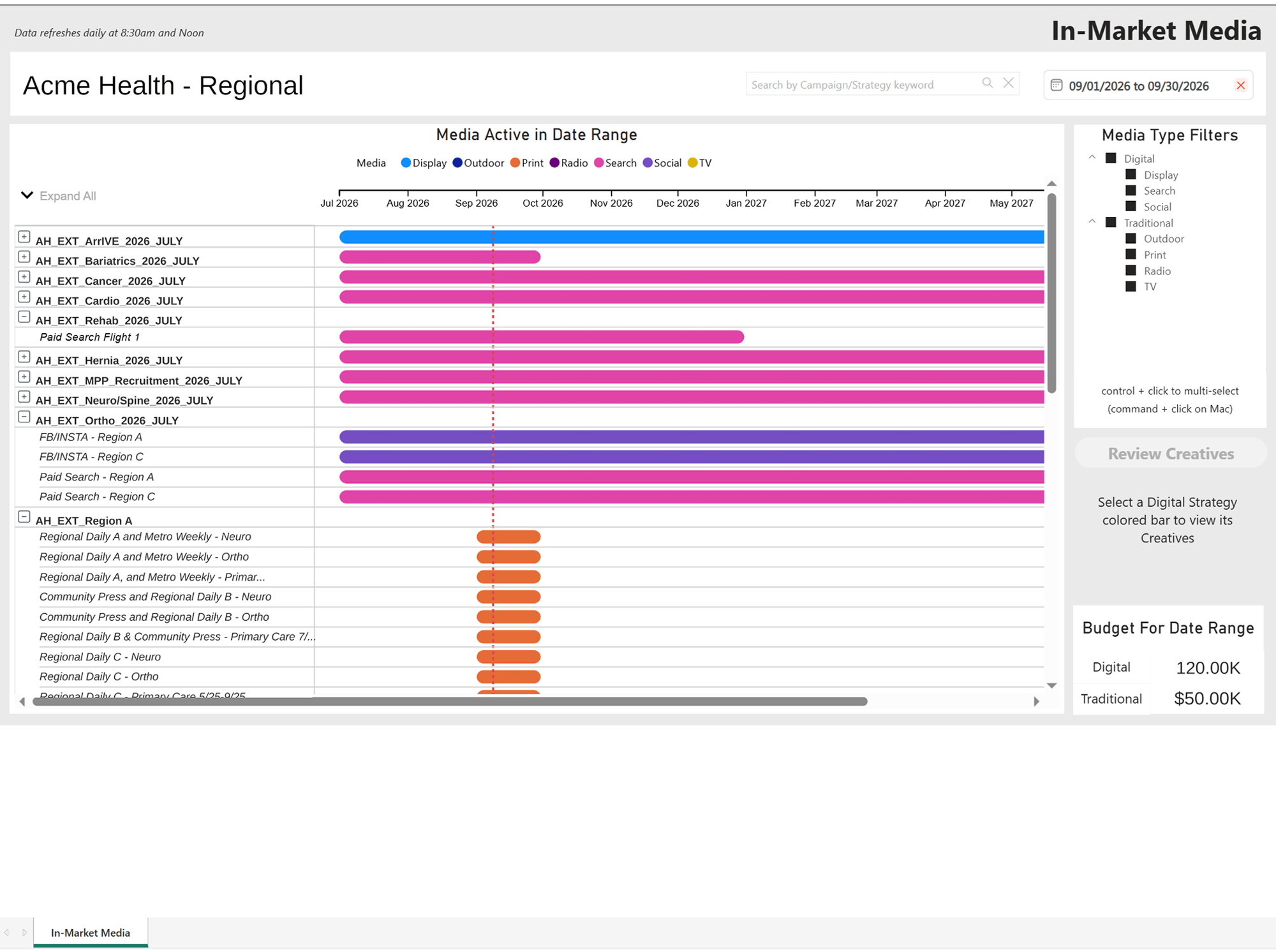
A board doesn't generate a click or a view count the way a digital placement does. What HelloMPP shows for out-of-home is the in-market report: which boards and formats are live, where, and for how long, alongside every other channel running in the plan. The traffic and audience modeling behind a placement gets built during planning, not pulled from a dashboard after the fact.
Anyone can find a billboard's location. Buying it well takes knowing its actual traffic, visibility, and history, information vendors don't hand over freely. MPP's out-of-home team includes people with more than 30 years of individual experience in the category, with vendor relationships that surface unit numbers, impression data, and street-view verification before a board is ever proposed. That's the difference between a placement that looks good on a map and one that actually performs.