Unlocking ROAS: Understanding return on ad spend

Paid media offers a wealth of performance data. And these days, clicks and impressions don’t cut it. Proving the value of your marketing efforts is critical and directly demonstrates your return on investment. That’s why when it comes to campaign performance, we consistently get this question from clients: are my ad campaigns making money?
That’s where Return on Ad Spend (ROAS) comes into play. While it’s important to look at all pertinent performance metrics, ROAS is your primary indicator of success. This article will break down ROAS, its advantages, and potential limitations.

What is Return on Ad Spend (ROAS)?
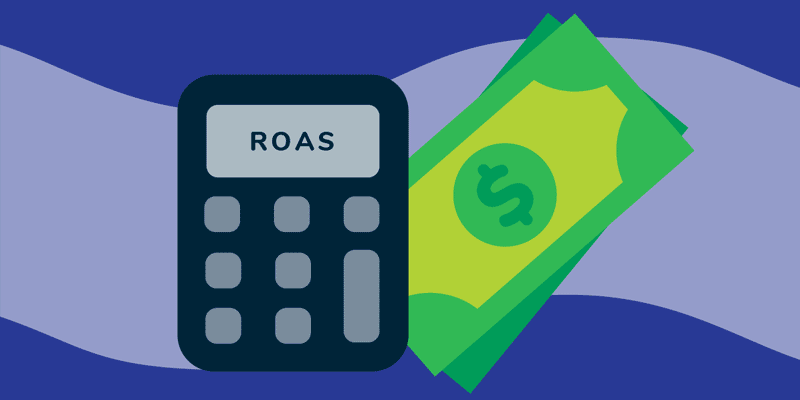
ROAS calculates the gross revenue generated for every dollar spent on advertising. Simply put, it shows how much revenue you’re getting back for each dollar invested in your digital marketing strategies. A higher ROAS indicates a more successful campaign and vice versa.
Let’s do some quick math…
ROAS = Revenue Attributed to Ad Spend / Advertising Costs
For example, if you spend $1,000 on a Google Ads campaign and it brings in $3,000 in attributed revenue, your ROAS is 3:1 (sometimes shown as 3x or 300%). For every dollar spent, the campaign returned three dollars in revenue.

Whether 3:1 is good depends on your margins. If your profit margin is 25%, that $3,000 in revenue produces $750 in gross profit, which is less than the $1,000 you spent. To break even at a 25% margin, you’d need a ROAS of 4:1. You can find your own break-even ROAS by dividing 1 by your profit margin (1 ÷ 0.25 = 4).
ROAS vs. ROI: Understanding the differences
ROAS: Focuses specifically on the revenue generated from a specific ad campaign.
ROI: Measures the overall profitability of an investment, taking into account all expenses, not just advertising costs.
ROAS provides a clear view of the direct impact of your advertising efforts, while ROI offers a broader perspective on the business as a whole.
Advantages of tracking ROAS in digital marketing
ROAS measures how effective and efficient campaigns are but has other benefits as well.
ROAS tracking advantages
- Financial Accountability: Every business needs to generate revenue, and by tracking ROAS, you know where the money is going. ROAS provides a clear, quantifiable measure of how ad spend translates into revenue.
- Refines Strategy: ROAS allows for informed budget allocation and strategic planning. If you see a campaign generating a high ROAS that’s limited by the budget, increase it to generate more sales and revenue.
- Performance Benchmarking: ROAS allows you to set clear, measurable goals for your campaigns.
Limitations of ROAS in Digital Marketing
While ROAS is a valuable metric to track, remember to keep its limitations in mind.
ROAS tracking limitations
- Doesn’t Account for Profitability: ROAS only measures revenue, not profit. It doesn’t factor in the cost of goods sold or other expenses. (SEE ABOVE)
- Ignores Long-Term Value: Focusing solely on ROAS can lead to neglecting long-term customer value, such as repeat purchases and customer lifetime value (CLV).
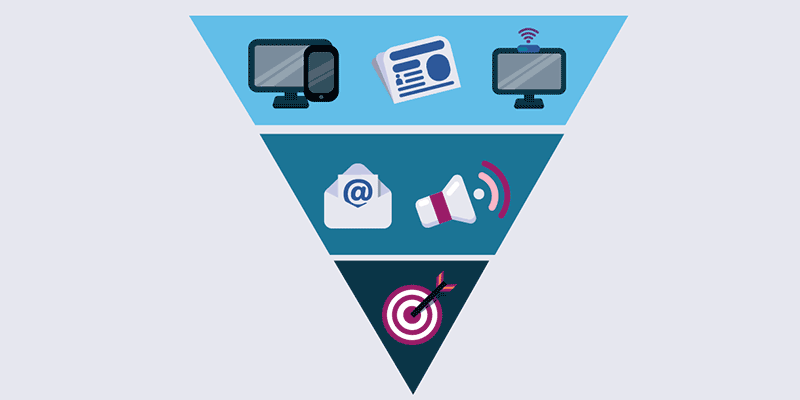
- Narrows the Focus: Don’t forget the importance of campaigns focused on brand awareness or customer loyalty, which are crucial for long-term growth. These campaign goals are critical for full-funnel marketing.
ROAS tells you how much revenue each ad dollar brings back, but it only means something next to your margins. Start by calculating your break-even ROAS so you know the number a campaign has to beat to make money. Once you’re tracking it, shift budget toward the campaigns clearing that line and give underperformers a defined window to improve before cutting them. Keep in mind that channels built for awareness rarely show their full value in a ROAS report, so judge them on the role they play in the mix.